
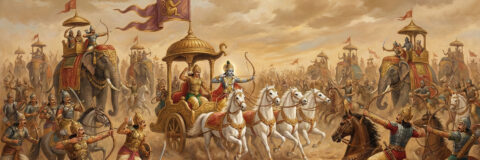

Think you know the Mahabharata? If your version comes from the old Sunday morning TV serials, you’ve basically seen the Disney edit. You know the drill: noble Pandavas, evil Kauravas, a game of dice, and a big war. Good beats Evil. The End.
But if you actually read Vyasa’s original text—the unabridged, raw version—it’s a totally different beast. It’s messy. It’s dark. It’s a psychological horror story where the “good guys” do terrible things and the “bad guys” have moments of heartbreaking grace.
If you dig past the popular retellings, you hit a layer of folklore that completely flips the script. Here are ten stories from the shadows of Kurukshetra that usually get cut from the family-friendly versions.
1. Sahadeva knew it was coming
Everyone talks about Arjuna’s aim or Bhima’s brute strength, but the youngest brother, Sahadeva, had the worst superpower imaginable: he knew everything before it happened.
There’s a gruesome legend about this. When their father Pandu died, he supposedly told his sons to eat his flesh (or brain) to inherit his knowledge. Sahadeva was the only one who actually did it. Instantly, the timeline of the universe snapped into focus for him.
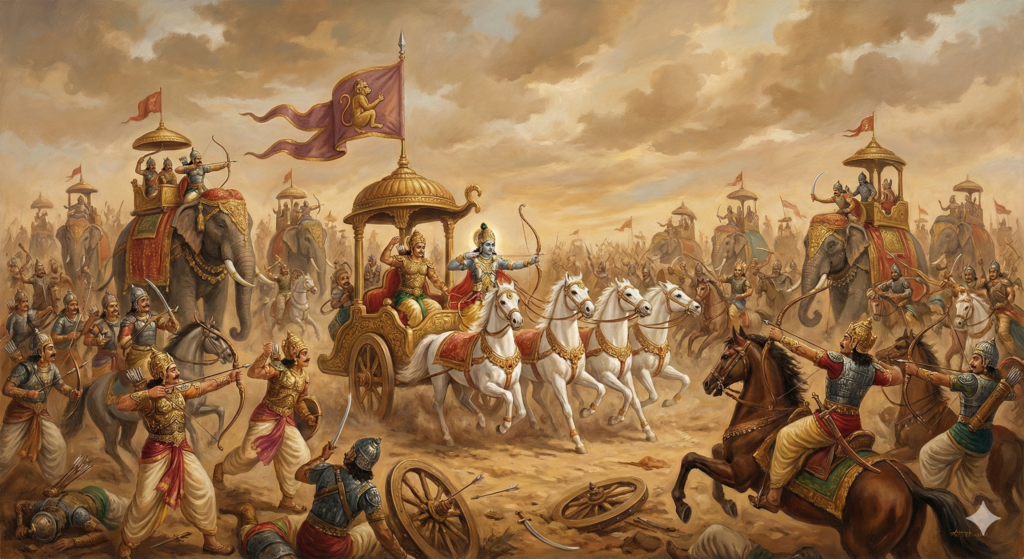
He saw the dice game. He saw the humiliation of Draupadi. He saw the genocide of the war.
So why didn’t he scream? Because there was a catch. In some versions it’s Krishna, in others a divine curse, but the rule was simple: If you speak what you know, your head splits open. Imagine the torture of sitting in that gambling hall, watching your brother bet away your wife, knowing exactly how bad it’s going to get, and being forced to sit on your hands. He wasn’t just the “quiet one”; he was suffering in silence.
2. The Dice Were Alive: The Bones of Shakuni’s Father
Shakuni is usually played as a guy who just loves chaos, like a mythological Joker. But his motive wasn’t chaos; it was cold revenge against the entire Kuru lineage—Pandavas and Kauravas.
The backstory is brutal. Bhishma had conquered Shakuni’s kingdom and thrown his whole family (King Subala and 100 sons) into a prison. The catch? They were given food for only one person.
King Subala made a choice that would make a horror movie director flinch. He decided to starve the rest of the family to keep Shakuni—the smartest one—alive. As Subala lay dying, he told Shakuni to take the bones from his own ribcage and make dice out of them. Because they were infused with his father’s dying magic, the dice would never roll a number Shakuni didn’t want.
When those dice rolled in the assembly hall, it wasn’t luck. It was Shakuni’s dead father taking down the empire that destroyed his family.
3. The man named “Good Ruler”
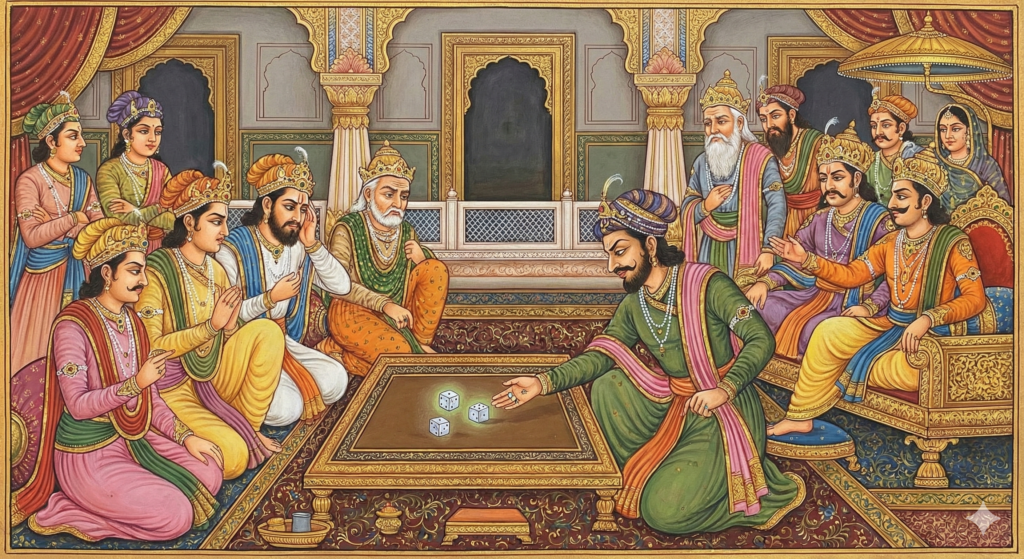
History is written by the winners. We know him as Dur-yodhana (Bad Ruler). But honestly, what mother names her baby “Bad Ruler”?
His birth name was Suyodhana (Good Ruler).
“Duryodhana” was likely a slur used by the opposition. By all accounts, other than his obsession with his cousins, he was actually a stellar king. No droughts, happy subjects, fair taxes. He was fiercely loyal to his friends (look at Karna) and didn’t care about caste. It forces you to ask a weird question: Can you be a great king and a terrible person at the same time? The epic seems to say yes.
4. The Kaurava who stood up
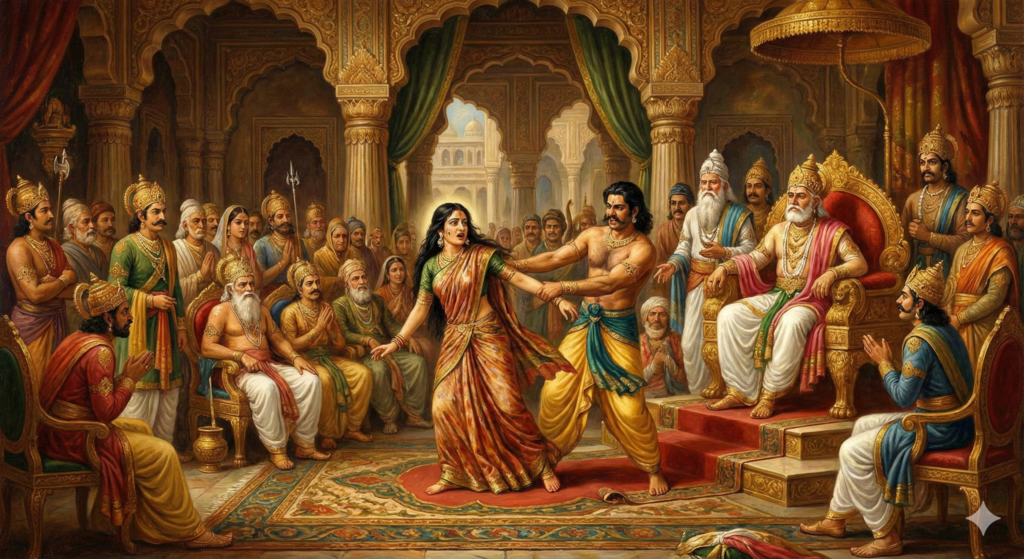
The disrobing of Draupadi is the lowest point of the story. The elders—Bhishma, Drona—sat there looking at the floor. But one guy actually stood up. And he was a Kaurava.
Vikarna, one of the 99 brothers, stood up and shouted that this was wrong. He argued legal technicalities and moral outrage while the “good guys” were silent.
He was shouted down, of course. He eventually fought for Duryodhana out of brotherly duty, but he died clean. When Bhima killed him, he actually cried, hating that he had to kill the one decent man on the other side just because he was wearing the wrong jersey.
5. The five golden arrows
There’s this moment of high tension during the war where Duryodhana accuses Bhishma of going easy on the Pandavas. Bhishma, insulted, grabs five arrows, chants a mantra, and says, “Okay, these five arrows will kill the five Pandavas tomorrow. Guaranteed.”
Duryodhana, being paranoid, takes the arrows for safekeeping overnight.
Enter Krishna. He wakes up Arjuna and reminds him of an old debt. Years ago, Arjuna saved Duryodhana from some Gandharvas, and Duryodhana promised him a boon. Krishna tells Arjuna: Go cash it in now. Ask for the arrows.
Arjuna walks into the enemy camp, asks for the arrows, and Duryodhana—bound by his warrior code—hands them over. He literally handed away his victory because he wouldn’t break a promise. It’s tragic, really. His integrity was his downfall.
6. Ekalavya’s revenge
We all hate the story of Ekalavya cutting off his thumb. It feels like pure injustice. But in this epic, karma is a boomerang that always comes back.
Legend says that Drishtadyumna (Draupadi’s brother who leads the army) was Ekalavya reborn.
His sole purpose in life was to kill Dronacharya. And he did. In the war, he’s the one who beheads Drona. The student who was rejected and maimed by the teacher came back in the next life to be the executioner of that teacher. The scales balanced out.
7. The God of Death in the servant’s quarters
Vidura is the guy everyone ignores because he was born to a maid. But spiritually? He was the heavyweight in the room.
Vidura was the incarnation of Yama, the God of Death and Justice.
He was cursed to be born human. The irony is staggering: The God of Justice was sitting right there in the court when the greatest injustice (Draupadi’s humiliation) happened, and he was powerless to stop it because of social hierarchy. It’s a biting commentary on how society can muzzle the truth.
8. It’s all happening inside you
If you want to get philosophical, the whole war is an allegory for your own body.
- Draupadi is the Body/Life Force.
- The Pandavas are the Five Senses (Sight, Smell, Taste, etc.) and virtues.
- The Kauravas are the hundred vices and distractions of the mind.
The story is saying: When your Senses (Pandavas) gamble away your Body (Draupadi) to your Vices (Kauravas), you lose everything. The war isn’t just in India; it’s happening in your head right now.
9. The Head on the Hill
If you want the only unbiased review of the war, ask Barbarik. He was Bhima’s grandson, and he was so strong he could’ve ended the war in sixty seconds. Krishna, realizing this guy was a glitch in the matrix, asked for his head.
Barbarik gave it, but asked to watch the battle. So, they put his head on a hill.
After the war, the Pandavas were arguing about who was the MVP. They asked Barbarik. He laughed and said, “I didn’t see any of you fighting. I just saw Krishna’s chakra killing people and Draupadi drinking blood. You guys were just pawns.”
Talk about an ego check.
10. The book was called “Victory”
We call it the Mahabharata, but Vyasa originally titled it “Jaya” (Victory).
Which is bleak, because nobody wins. The Pandavas get the throne, sure, but their kids are dead, their family is dead, and they rule over a graveyard. They spend their final years depressed before dying on a mountain.
The title is ironic. It forces you to ask: Is war ever really a victory? The only “Jaya” worth having was the spiritual victory over the self—and almost nobody in the book actually pulled that off.