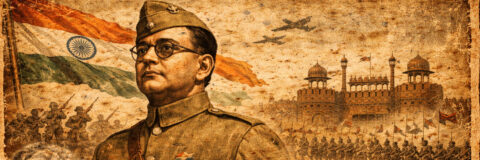

In the pantheon of Indian independence, some figures are statues—static, cold, and carved in predictable lines of reverence. Then there is Subhash Chandra Bose.
Netaji was not a statue; he was a forest fire. Even today, decades after he vanished into the mists of history, his name evokes a visceral reaction that few other leaders can match. To talk about Bose is to talk about a man who didn’t just want freedom; he demanded it with a ferocity that made empires tremble and fellow revolutionaries blink.
But beneath the military uniform and the stern spectacles was a man of profound intellectual depth, a radical thinker who “enlightened” the concept of freedom long before he ever picked up a sword.
1. The Enlightenment: More Than Just ‘Purna Swaraj’
When we think of Bose, we often jump straight to the Indian National Army (INA). But his enlightenment began much earlier, in the hallowed halls of Cambridge and the gritty streets of Calcutta.
For Netaji, freedom (Azadi) wasn’t merely the departure of the British. It was a total transformation of the Indian soul. He realized early on that colonial rule had inflicted a “slave mentality” on the masses. To him, enlightenment meant a psychological insurrection.
The Civil Service Sacrifice
One of the rarest, yet most defining, facts of his early life was his resignation from the Indian Civil Service (ICS) in 1921. He had placed 4th in the competitive exam—a feat of incredible intellect. Yet, he wrote to his brother, Sarat, “Only on the soil of sacrifice and suffering can we raise our national edifice.” By rejecting the “Heaven-Born Service,” Bose enlightened the youth of India to a radical truth: You cannot serve the oppressor and the oppressed at the same time. This wasn’t just a career move; it was a spiritual divorce from the British Raj.
A Visionary Social Blueprint
Long before India gained independence, Bose was thinking about the “day after.” He was the one who pushed for the National Planning Committee in 1938. He envisioned an India that was industrialized, scientifically advanced, and—crucially—socially egalitarian. He spoke of women’s empowerment and a classless society with a clarity that was decades ahead of its time.
2. Rare Facts: The Man Behind the Myth
To humanize Netaji, we must look at the small ripples he left behind—the details often lost in the roar of battle cries.
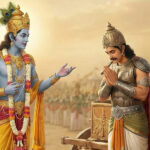
- The Linguist and Philosopher: Bose was deeply influenced by the teachings of Swami Vivekananda. He carried a small copy of the Bhagavad Gita in his pocket, not as a religious relic, but as a manual for selfless action (Karma Yoga). He was also fluent in multiple languages, using his linguistic prowess to unite diverse POWs (Prisoners of War) in Europe and Southeast Asia.
- The Rani of Jhansi Regiment: While many leaders were still debating the “role of women” in public life, Bose created one of the world’s first all-female combat units. He didn’t want women to be nurses or support staff; he wanted them on the front lines. This wasn’t just military strategy; it was a statement on human equality.
- The Secret Romance: For years, the story of Emilie Schenkl, his Austrian wife, and their daughter Anita, remained in the shadows. This side of Bose—a man capable of profound, tender love amidst the chaos of a global war—humanizes the “Springing Tiger.” It shows a man who sacrificed his personal happiness and the chance to see his child grow for a country that was thousands of miles away.
3. The Great Escape: A Masterclass in Defiance
If there is one event that cements Bose’s status as a real-life superhero, it is his Great Escape from house arrest in 1941.
Disguised as a Pathan insurance agent named “Maulvi Mazharuddin,” Bose slipped past British intelligence, traveled through the heart of the North-West Frontier, crossed into Afghanistan, and eventually reached Moscow and Berlin.
Think about the sheer audacity: A man whose face was known to every policeman in India, traveling across continents during the peak of World War II, fueled by nothing but the audacity of hope. This journey wasn’t just a flight from prison; it was a pilgrimage for allies. It showed the world that India was no longer a “domestic problem” for Britain—it was an international player.
4. The Disappearance: A Mystery Frozen in Time
August 18, 1945. Taihoku, Taiwan.
The official narrative states that Netaji died in a plane crash, succumbing to third-degree burns. But for millions of Indians, this explanation was—and is—bitterly unsatisfying. The “disappearance” of Netaji is perhaps the greatest unsolved mystery of the 20th century.
The Layers of Doubt
Why were there no photographs of the body? Why was the news of his death delayed by five days? These questions birthed a thousand theories.
- The Siberian Theory: Some believe he escaped to the Soviet Union, seeking Stalin’s help, only to be imprisoned or liquidated as the Cold War dynamics shifted.
- The Gumnami Baba Theory: For decades, a mysterious monk lived in Uttar Pradesh, possessed of deep knowledge of international affairs and personal effects that bore a striking resemblance to Netaji’s.
While commissions (Shah Nawaz, Khosla, Mukherjee) have come and gone with conflicting reports, the human element remains: the collective refusal of a nation to believe its hero could die in a mundane accident. We wanted him to be immortal because his spirit felt invincible.
5. The Neglected Giant: Why the Silence?
For decades after 1947, the narrative of Indian independence was streamlined. It became a story of Satyagraha and non-violence alone. While Gandhi and Nehru are undeniably central, the contribution of Bose and the INA was often relegated to the footnotes or treated as a “fringe” military effort.
The INA Trials: The Real Catalyst
Historical records now suggest that it wasn’t just the non-violence movement that forced the British to pack their bags—it was the fear of a mutiny. When the British tried to court-martial INA officers at the Red Fort, the Indian soldiers in the British Indian Army—the very backbone of colonial rule—began to revolt.
Clement Attlee, the British Prime Minister at the time of independence, later admitted that the influence of Gandhi was “minimal” compared to the impact of Bose’s activities and the subsequent unrest in the armed forces.
Yet, for years, Bose was denied his rightful place in the primary sun of Indian history. His files remained classified, his family was allegedly surveilled, and his portrait was only hung in Parliament decades later.
6. Humanizing the Legend: The Weight of the Crown
To truly understand Bose, we must acknowledge the crushing loneliness of his path.
He was a man who broke away from his mentor (Gandhi), was ousted from his party (the Congress), and had to seek help from the “Devil” (the Axis powers) to fight a “Demon” (the British Empire). He lived in a constant state of moral and physical peril.
Imagine the mental toll of standing in the jungles of Burma, watching your soldiers starve and die of malaria, knowing that the world’s most powerful empire was hunting you. Yet, when he addressed his troops, his voice never wavered.
“Give me blood, and I will give you freedom!” This wasn’t just a slogan; it was a contract. He gave his blood, his family life, and eventually, his very existence to the cause.
7. The Eternal Return
Today, the tide is turning. We are finally declassifying the files and building the statues. But the true tribute to Netaji isn’t in granite or bronze. It is in the spirit of defiance he enlightened within us.
Netaji taught us that freedom is not a gift—it is a right that must be seized. He taught us that “Unity, Faith, and Sacrifice” (Ittehad, Itmad, aur Qurbani) are the pillars of a strong nation.
Subhash Chandra Bose remains the “Uncrowned King” of the Indian heart. Whether he died in the flames of Taihoku or lived out his days as a silent monk in the Himalayas, his mission was a success. He woke a sleeping giant. He proved that an empire is only as strong as the fear of its subjects—and once that fear is gone, the empire is already dead.
Netaji didn’t just fight for a country; he fought for the dignity of every Indian. And that is why, nearly a century later, when we say “Jai Hind”—the greeting he popularized—we aren’t just saying “Victory to India.” We are echoing the heartbeat of a man who refused to be broken.