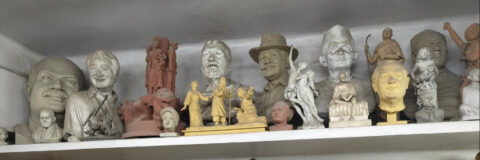

If you walk down the winding lanes of Ghurni in Krishnanagar, about 100 kilometers north of Kolkata, the first thing that hits you is the smell. It isn’t just the dusty scent of rural Bengal; it is the deep, damp, prehistoric smell of river clay.
This is Ghurni Putulpatty, a neighborhood where the gods are born in backyards, and ordinary village life is frozen in time, shrunk down to the size of your palm.
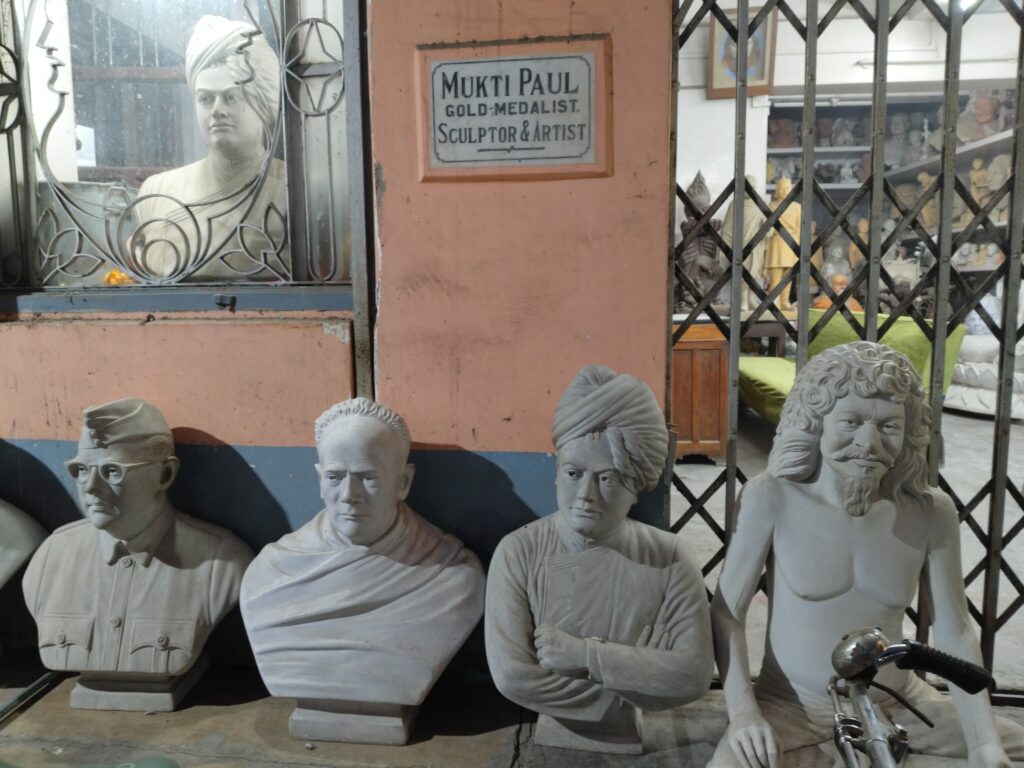
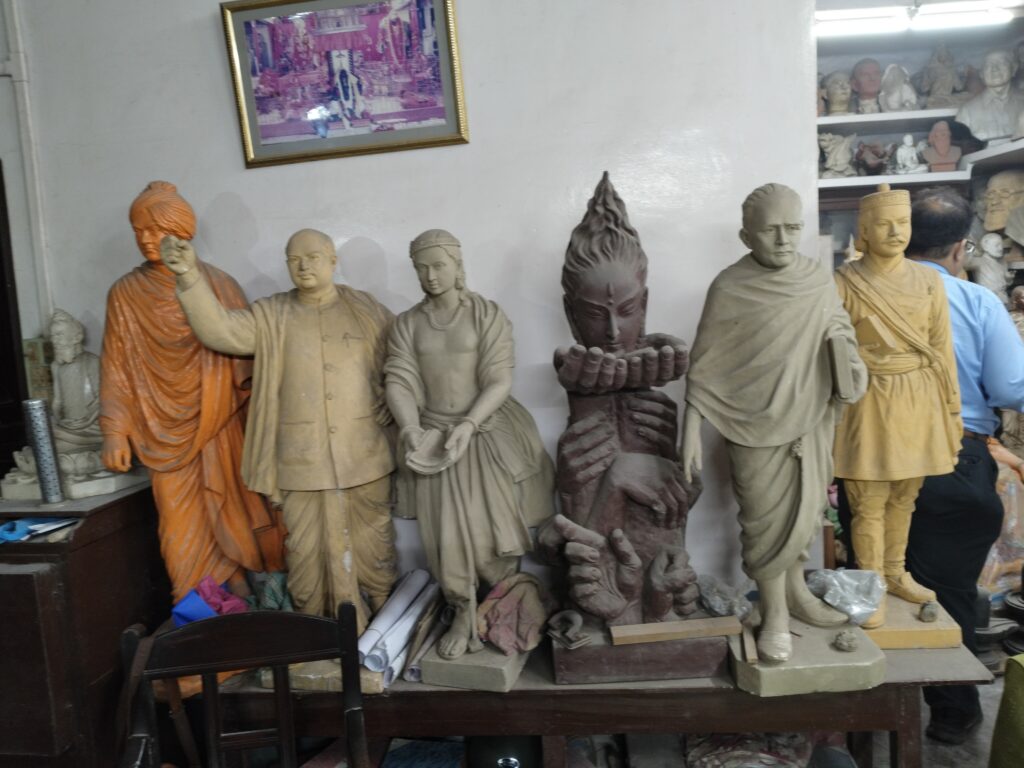
For centuries, this tiny pocket of the Nadia district has been the beating heart of India’s most hyper-realistic clay modeling tradition. But to call them “dolls” (putul) feels like a disservice. A doll is a toy; what the artists of Ghurni create are breathless moments of life, captured in mud.
The Theatre of Mud
Imagine holding a figure no taller than a teacup. It depicts a village fisherman. You don’t just see a generic man; you see the exhaustion etched into the wrinkles of his forehead. You see the taut tendons in his forearm as he pulls a net. You see the distinct texture of his skin, darkened by the sun. If you look closely enough, you might swear you can see a vein pulsing in his neck.
This isn’t a caricature; it is anatomy studied with the precision of a surgeon and the soul of a poet.
The art form flourished in the 18th century under Maharaja Krishnachandra, a patron who invited potters from Dhaka and Natore to settle here. Over generations, the “Kumbhakar” (potter) community didn’t just make idols for worship; they began documenting the world around them.
While the rest of India was carving stone or casting bronze, Ghurni was obsessed with the transient beauty of clay. They created “genre scenes”—a weaver at his loom, a mother delousing her child’s hair, a priest lost in chants. These weren’t kings or deities; they were the invisible people of Bengal, immortalized in the rich alluvial soil of the Jalangi River.
The Hands Behind the Magic
To understand Ghurni, you must meet the artists. The lineage is dominated by the Pal (or Paul) families. Names like Kartik Chandra Pal and Subir Pal are whispered here with the reverence usually reserved for film stars.
Let’s take a walk into a typical workshop.
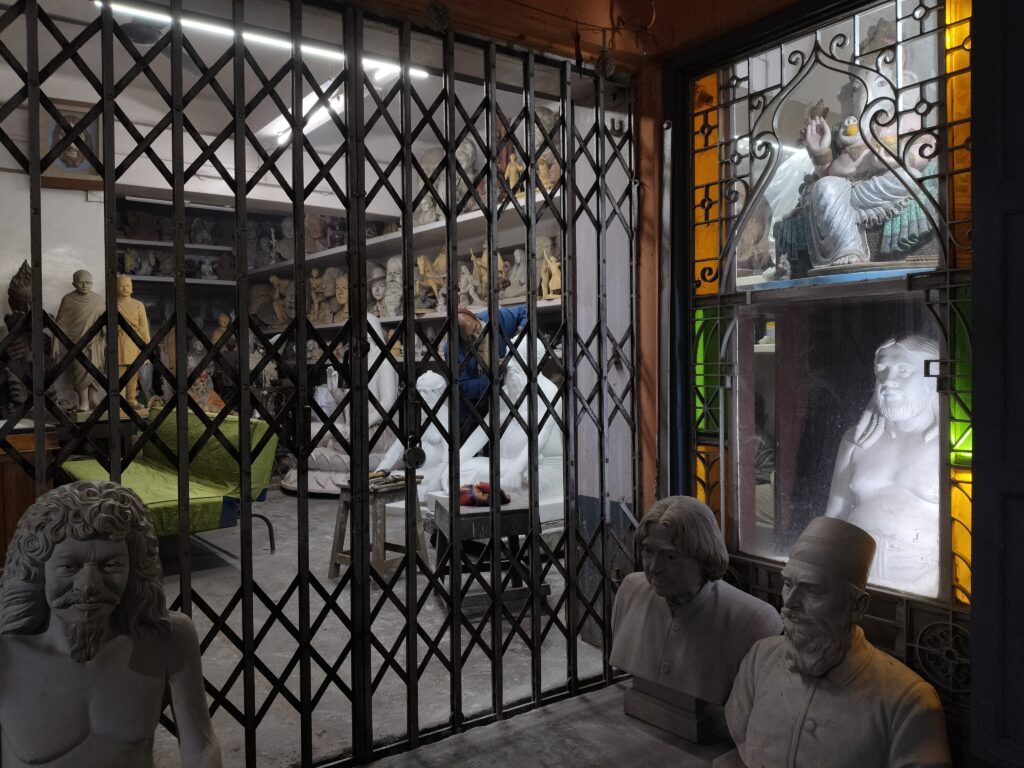
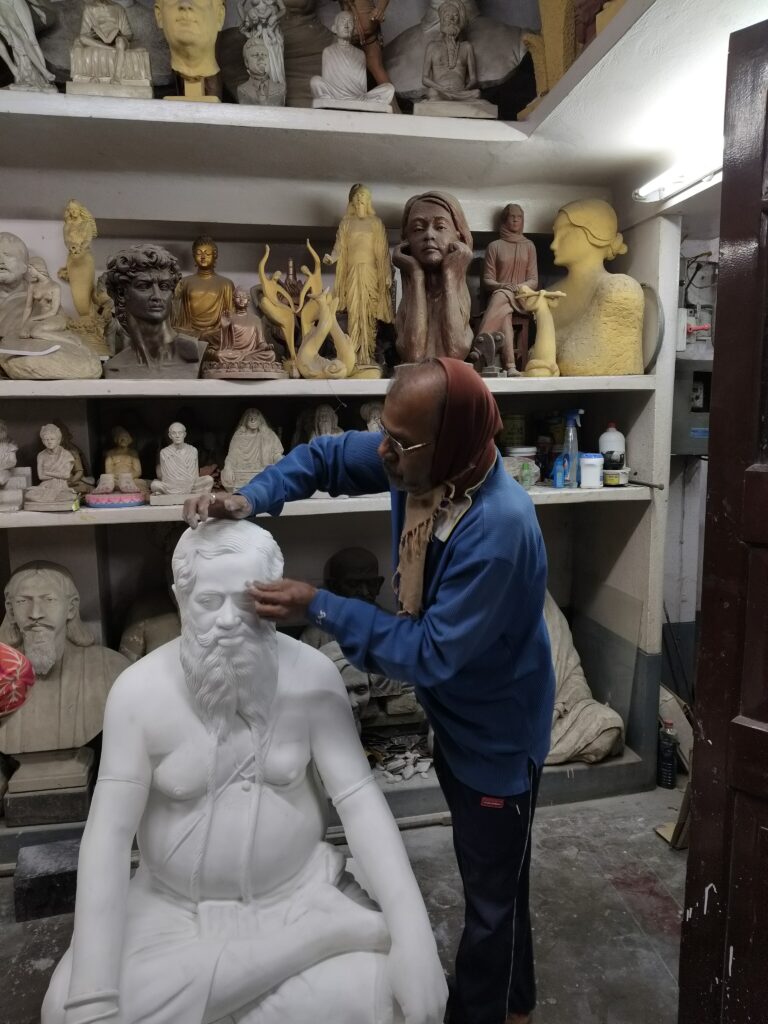
The light is dim, filtering through bamboo slats. An artist, let’s call him Probhat-da, sits cross-legged on a mat. He isn’t looking at a photograph. The image is in his blood memory. He picks up a lump of etail mati—a sticky, clay-rich soil.
His fingers move with a speed that blurs the line between thought and action. First, a wire skeleton. Then, the straw packing. Finally, the clay.
“The clay speaks,” he might tell you if you ask how he gets the expression right. “You don’t force the smile. You wait for the clay to become happy.”
The process is grueling. The clay is mixed with cotton or rice husk for strength. Once molded, the figures are sun-dried, creating a courtyard filled with hundreds of grey, ghost-like figures waiting for their souls. They are fired in kilns, and then comes the painting.
This is where the realism turns uncanny. They use fine brushes to paint the iris of an eye, the blush on a cheek, the dirt under a fingernail. Traditionally, they used colors derived from tamarind seeds and natural earth, though modern acrylics are creeping in. Finally, they are dressed—not in painted clothes, but in actual miniature textiles. A two-inch sari is draped with the same pleats you’d see on a real woman.
A Legacy in Twilight
Walking through Putulpatty today feels bittersweet. The artistry is undeniable—Ghurni’s clay models have found homes in the British Museum and the homes of European royalty. Yet, the modern world is closing in.
The younger generation of the Pal families faces a tough choice. The painstaking labor required to create a masterpiece often doesn’t pay as well as a desk job in Kolkata or Bangalore. The specific river clay they need is becoming harder to source, and the market is flooded with cheaper, lifeless plaster molds.
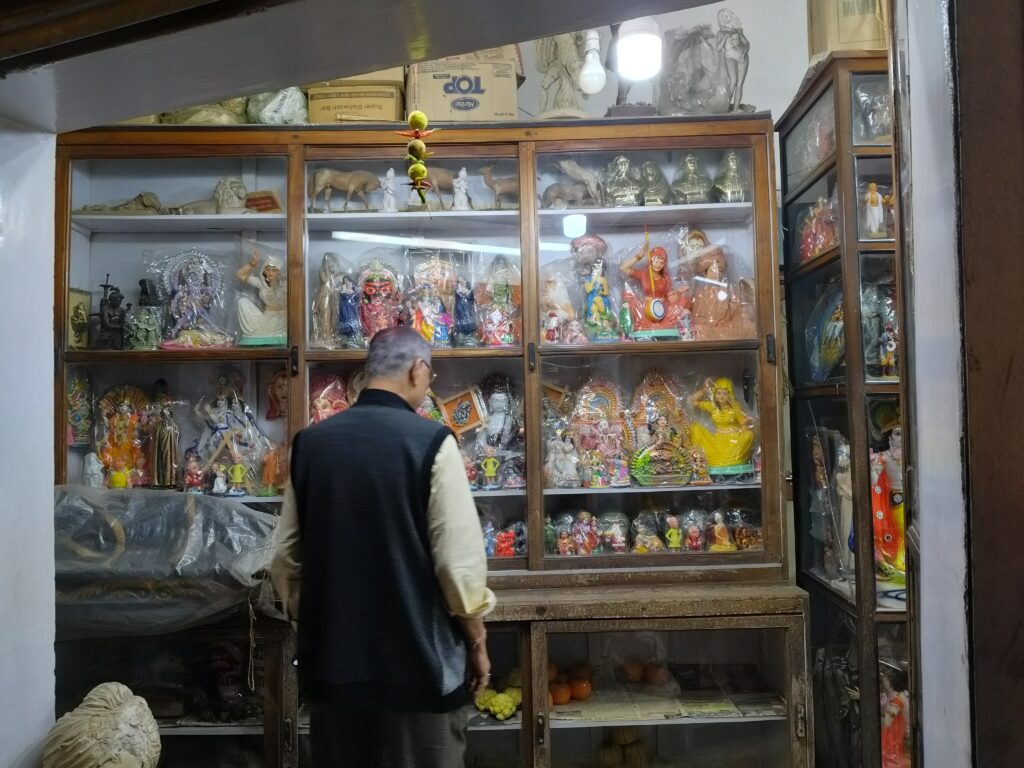
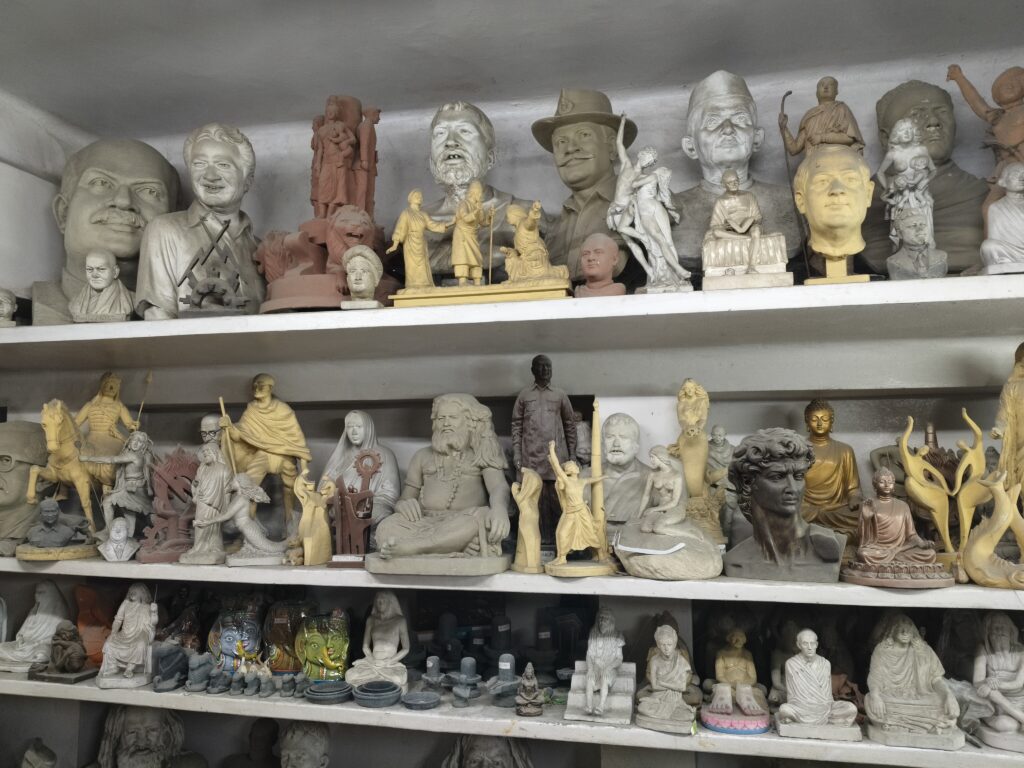
You can see the tension in the shops. Next to a breathtakingly realistic statue of Rabindranath Tagore, you might see a garish, mass-produced fiberglass figure. The artists have to eat, and sometimes art must bow to commerce.
But the fire hasn’t gone out.
There is a stubborn pride in Ghurni. You see it in the old master teaching his grandson how to smooth a clay cheek with a wet cloth. You see it in the artist who refuses to compromise on the anatomy of a clay horse, even if the buyer wouldn’t notice the difference. They are the guardians of a dying sort of magic—the ability to look at a lump of mud and see a human soul.
Why You Must Go
Ghurni Putulpatty isn’t just a shopping trip; it is a pilgrimage for anyone who loves art. When you buy a piece from here, you aren’t just buying a souvenir. You are taking home the humid air of the Ganges delta, the heat of the kiln, and the legacy of a family that has spent 300 years perfecting the curve of a clay smile.
The Day Trip Itinerary: Kolkata to Krishnanagar
Total Distance: ~100-110 km Best Time to Visit: Winter (October to March) is ideal. If you want to see the city in its full glory, visit during Jagaddhatri Puja (usually November), which is even bigger here than Durga Puja.
1. Getting There
- By Train (Recommended): This is the most authentic and often fastest way.
- Departs: Sealdah Station (Main).
- Train Name: Take any “Krishnanagar City Local” or the “Lalgola Passengers” (like the Bhagirathi Express).
- Duration: Approx. 2 to 2.5 hours.
- Target: Aim for a train around 8:00 AM or 9:00 AM to reach by 11:00 AM.
- By Bus: Buses leave from Esplanade (Dharmatala) in Kolkata. Look for the CSTC or private buses heading toward Krishnanagar/Berhampore. It takes about 3.5 – 4 hours depending on traffic on NH-34.
- By Car: A drive takes about 3.5 hours via NH-12 (formerly NH-34). The road can be congested, so an early start (7:00 AM) is crucial.
2. The Plan
- 11:00 AM – Arrival & Sweet Start: Upon reaching Krishnanagar, do not do anything before tasting the city’s legendary sweets.
- Must Eat: Sarpuria (a creamy, baked sweet) and Sarbhaja (fried layers of milk cream).
- Where: Adhar Chandra Das is the oldest and most famous shop. It is an institution.
- 12:00 PM – The Main Event: Ghurni Putulpatty: Take a toto (e-rickshaw) from the station or sweet shop to “Ghurni Putulpatty.” It is about 15-20 minutes away.
- Walk the lanes. Most workshops are open-fronted. You can stand and watch the artisans work.
- Tip: Ask permission before clicking photos of unfinished idols; some artists are protective of their designs.
- 2:00 PM – Lunch: Head back towards the town center (High Street area). There are simple “Rice Hotels” serving authentic Bengali thalis with fish curries (try the local river fish if available).
- 3:00 PM – History Loop:
- Krishnanagar Rajbari (Royal Palace): You generally cannot enter the main palace as it is private property, but the architecture from the outside and the massive durability of the “Nahabat Khana” gate are worth seeing.
- Roman Catholic Church: A stunning structure with European architecture, painted in a distinct reddish-brown, located near the Rajbari.
- 5:00 PM – Return: Catch a return train or bus before it gets too late, as rural transport thins out after dark.
The Man Who Sculpted the Saint
Tarit Pal’s claim to fame—and the story that will make your blog readers stop scrolling—is his connection to Mother Teresa.
- The Masterpiece: Tarit Pal created a life-size clay statue of Mother Teresa that is widely regarded as one of the most accurate depictions of her ever made.
- The Story: The legend in Ghurni goes that his work was so hyper-realistic that it captured not just her physical wrinkles, but her hunched posture and the specific look of compassion in her eyes. It wasn’t just a statue; it felt like a presence.
- The Recognition: His work on Mother Teresa brought him immense acclaim, not just from art lovers, but from the Missionaries of Charity and the Catholic community.
Why He is Different from the Others
While artists like Subir Pal are famous for “Miniatures” (tiny figures), Tarit Pal is often celebrated for Portraiture (capturing the face of a specific person).
- The Eyes: Critics often say that Tarit Pal had a secret technique for painting eyes. He could give a clay statue a “gaze” that seemed to follow you around the room.
- The Emotion: Most Ghurni dolls capture action (a drummer drumming, a farmer farming). Tarit Pal excelled at capturing stillness and emotion. His figures often look contemplative or peaceful.
It is impossible to name every single artist in Ghurni because art there is a community affair. In many households, the grandfather molds, the son sculpts the fine details, and the women of the house paint the eyes and clothing. It is a collective effort involving hundreds of families.
However, there are specific dynasties and masters whose names define the history of Krishnanagar clay art. Here is a breakdown of the legends (past) and the masters (present).
The Historical Legends (The Pioneers)
These are the names that put Ghurni on the world map during the British Raj and early Independence era.
- Jadunath Pal: Often considered the “Michelangelo of Ghurni.” He was active in the late 19th/early 20th century. He was so skilled that his anatomical accuracy stunned European anatomists. His works were sent to international exhibitions in London and Paris during the colonial era.
- Bakkeswar Pal: A contemporary of the early masters, known for establishing the foundational style of the “realistic human figure” rather than just divine idols.
- Ram Lal Pal: Another titan of the early era. His ability to capture the “rural Bengali” look (the ribcage of a starving farmer, the posture of a tired weaver) set the standard for everyone who followed.
The Modern Legends (Mid-to-Late 20th Century)
These artists bridged the gap between the colonial era and the modern market.
- Kartik Chandra Pal: Perhaps the most famous name for the general public.
- Why he is famous: He created iconic statues of leaders like Mahatma Gandhi and Rabindranath Tagore. If you visit Ghurni today, “Kartik Pal’s Studio” is still a major landmark, now run by his descendants. He was a master of facial expressions.
- Mohan Banshi Rudra Pal: While the “Pals” dominate, the Rudra Pal lineage is also significant, particularly for large-scale Durga and Jagaddhatri idols that require immense structural engineering alongside artistic beauty.
The Contemporary Masters (Active or Recently Active)
These are the people you might meet or whose immediate work you will see if you visit today.
- Subir Pal: The current superstar of Ghurni.
- Specialty: He is a National Award winner. He is known for microscopic attention to detail. If you see a clay figure of a musician where you can see the veins on the hands and the texture of the instrument, it is likely a Subir Pal piece (or inspired by him).
- Ganesh Pal: Highly respected for both miniature work and larger institutional statues.
- Dilip Pal: A senior artist known for maintaining the traditional methods of firing and coloring.
- Saibal Pal: Part of the younger generation of veterans keeping the high-end artistic tradition alive amidst the flood of mass-produced goods.
- Budhdheswar Pal: Known for his incredible consistency in creating “Sets” (e.g., a full wedding party set, a village market set).
The Art Forms: What exactly do they make?
To understand the artist, you must understand the two distinct categories of their work:
- The “Matir Putul” (Miniatures/Genre Scenes):
- The Subjects: Everyday people. Fishermen, weavers, Santhal tribespeople, priests, vegetable sellers.
- The Style: Hyper-realism. They do not look like cartoons. They look like shrunken humans. They use real cloth for clothing and wire frames for structure.
- The Clay: They use the silt-heavy clay from the Jalangi river (etail mati), which allows for plastic-like molding.
- The “Pratima” (Large Idols):
- The Occasions: Durga Puja and Jagaddhatri Puja (which is massive in Krishnanagar).
- The Style: These are much larger but retain the “Ghurni touch”—the faces of the Goddesses often look softer, more compassionate, and more human than the stylized idols found in Kolkata.